Here is the rewritten text, crafted in the persona of a pragmatic menswear editor.
Your First Blue-Chip Style Asset: The Crossbody Bag
Let’s get one thing straight: your first significant designer purchase is not a moment of retail weakness. It’s a deliberate sartorial maneuver. Forget the whims of a man flush with a bonus check; this requires the foresight of a seasoned investor. In that context, a well-made crossbody isn’t just another bag—it's the foundational piece, your first blue-chip style asset.
Consider the cold, hard logic. That hyped-up logo hoodie you’ve been eyeing? It’s a guaranteed loss. Its relevance is tied to a fleeting moment in the spotlight, and its appeal will absolutely fade. Now, contrast that with a durable crossbody from a house known for its craftsmanship. This is where the crucial metric of ‘cost-per-wear’ comes into play—a concept any man serious about his wardrobe should master. An $800 hoodie worn, say, 25 times over two years, sets you back $32 each time you pull it on. Meanwhile, a $1,500 bag you carry almost daily for those same two years? The per-use cost plummets to a couple of dollars. The numbers are brutally honest.
This isn’t a piece locked into a single aesthetic; it's a sartorial skeleton key, unlocking coherence across your entire wardrobe. It provides the visual anchor that pulls a casual look together, giving it direction and weight. It grounds a technical shell jacket and cargos just as effectively as it sharpens up an unlined sport coat and chinos. And its most immediate, practical benefit? It liberates your pockets. No more unsightly bulges wrecking the drape of your trousers. You instantly appear cleaner, more composed, and far more intentional.
More than anything, this bag becomes your most tangible connection to a luxury house. Forget testing the waters with a wallet or a belt; those are fleeting touches. The crossbody offers a daily, physical dialogue with true craftsmanship. Every single day, you’ll register the specific grain of the leather under your fingers, the reassuring heft of the zipper pulls, and the intelligent placement of an internal pocket. It’s a constant, tactile reminder of the design principles you’ve invested in. This bag is your opening statement in the world of considered style. Make sure it speaks volumes.
Here is the rewritten text, crafted in the persona of a pragmatic menswear editor and style consultant.
The Crossbody Dossier: A Pragmatist’s Guide to Your First Real Bag
Let's get one thing straight: knowing you want a designer bag is the easy part. The real work—the part that separates a sound acquisition from an expensive paperweight—is in the execution. Your first serious crossbody shouldn't be chosen for the life you project on social media; it must be engineered for the one you actually lead.
1. Conduct a Ground-Truth Inventory.
Before a single webpage is opened or a store is entered, perform this simple exercise: dump the contents of your pockets and current bag onto a flat surface. Take a hard look. What’s the non-negotiable kit you haul around daily? We’re talking phone, wallet, keys, earbuds, sunglasses—your absolute essentials. This collection of items is your baseline capacity requirement. The bag you procure must house this gear with room to spare, not look like it’s about to burst at the seams. Are you a minimalist who only needs a phone and a card sleeve? A lean phone pouch is your play. Do you lug a tablet or a paperback for the commute? Then you’re looking at a proper messenger bag. Utility must govern the design. Period.
2. Your Fabrication Is Your Philosophy.
Long before anyone clocks a logo, they’ll notice the material. This choice is the foundation of the bag's character and dictates how it will wear, age, and what it communicates about you.
- The Stalwart (Grained Leather): Think calfskin or Saffiano. This is your bulletproof option. It’s hard-wearing, resists scratches like a champ, and telegraphs an effortless, enduring confidence. For an inaugural investment, this is unequivocally the most intelligent and versatile route.
- The Urban Operator (Nylon & Tech Fabrics): Lightweight, often water-repellent, and possessed of a sharp, contemporary edge. This is the language of modern utility, perfected by brands like Prada. It signals a man in motion, prioritizing performance and a cleaner, more athletic aesthetic.
- The Billboard (Coated Canvas): We’re talking the iconic monograms of Louis Vuitton or the chevrons of Goyard. Unmistakably durable and built for immediate brand recognition, this is a far more conspicuous move. Be absolutely certain you’re prepared to live with a bold pattern for the long haul before you commit.
3. The Statement of Intent: Conspicuous or Covert?
There’s no correct answer to the branding question, only the one that aligns with your personal ethos. An oversized, prominent logo is a clear broadcast of allegiance. It’s a declaration. In contrast, a meticulously constructed piece with discreet branding suggests a different kind of self-assurance—one rooted in an appreciation for superior craftsmanship over overt recognition. For a foundational piece, the "quiet luxury" approach offers superior mileage. A bag that speaks through its quality rather than shouting a name will never fall out of favor.
4. Master the Architecture and Fit.
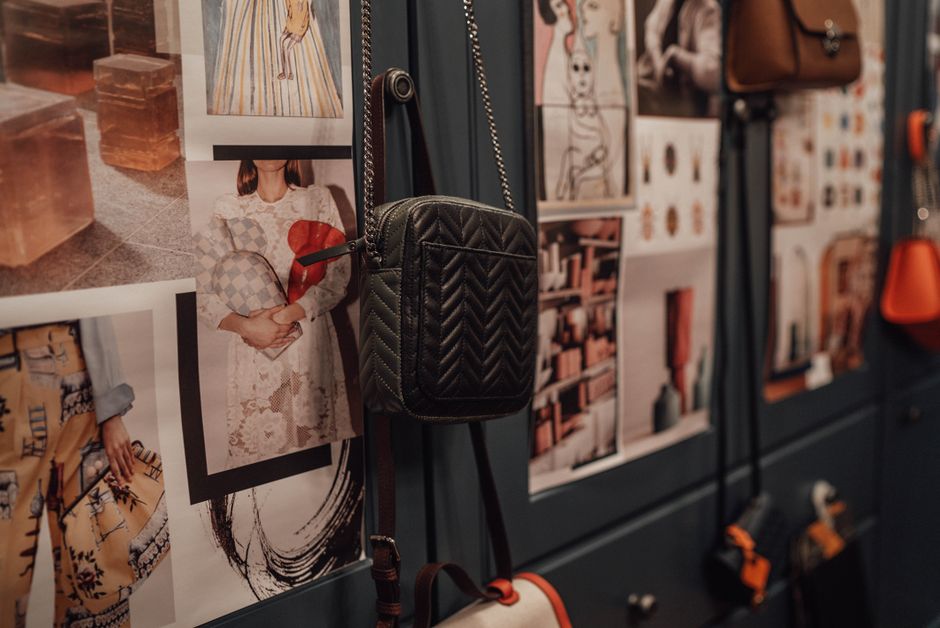
A bag is worn, not just carried. Its profile must complement your own frame and integrate seamlessly with your wardrobe. Tall, vertical pouches offer a streamlined, minimal look. The classic, boxy "camera bag" provides structure and is a proven, versatile silhouette. Softer forms, like saddle bags or small messengers, project a more relaxed, informal vibe. However, a description is not enough. You must take it for a test drive. Put it on. Feel its weight distribution. Adjust the strap to the perfect length. Walk around. See how it rests and moves against your body. This isn't just another purchase; you are selecting a daily companion. Treat the process with the gravity it deserves.