Here is the rewritten text, infused with the persona of a behavioral economist who geeks out about materials science.
The Intrinsic Worth of a Flawed Metal
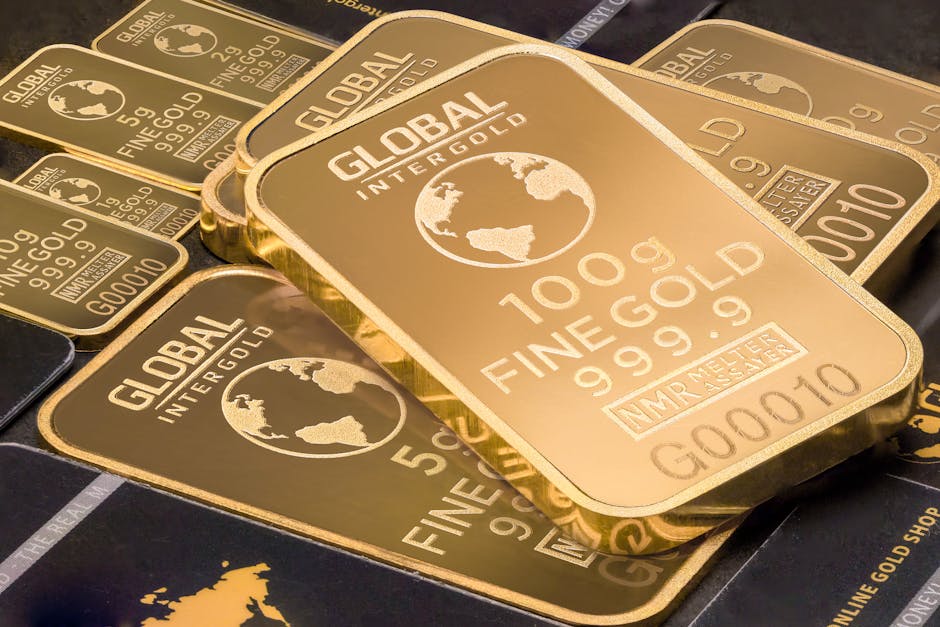
From the cold, hard calculus of materials engineering, gold in its purest elemental form (99.9% Au) is a structural liability. Its position on the Mohs scale of hardness is a paltry 2.5, meaning it boasts less structural integrity than a simple penny. You can mar its surface with a mere keratin appendage—your fingernail. Fashion a ring from this unadulterated element, and you’ve created an emblem of impermanence, an object destined to deform and abrade under the slightest duress. Any notion of using it for a load-bearing application is frankly laughable; you’d achieve better results with fired earthenware. Its utility is relegated to the microscopic realm, where its superb conductivity and chemical apathy make it ideal for delicate semiconductor wires, or it must be deliberately "debased" with other elements to lend it the resilience it so profoundly lacks.
And it is precisely this physical inadequacy that sets my cognitive gears turning. Our brains are wired with a deep-seated cognitive bias towards functionality. A tool’s value is a direct consequence of its ability to perform a task. We prize copper for its capacity to channel electrons and a roof for its power to repel the elements. This is a fundamental economic heuristic: if it works, it’s valuable. Gold gloriously shatters this heuristic. We are faced with a beautiful behavioral conundrum—the Paradox of Purity—where an asset’s monumental value is almost perfectly inverse to its practical application.
The resolution to this paradox lies in reframing our perspective. Cease to think of pure gold as a material and instead see it as an exceptionally clean signal of stored wealth, a concept straight out of information theory. The most robust signals are those with the highest signal-to-noise ratio. Gold’s value isn't derived from what it does; its value is the clarity of its message across time. Its profound inertness and its engineered irrelevance for mass consumption ensure the signal is never degraded by industrial demand or chemical decay.
Any effort to enhance its physical utility—for instance, by alloying it with copper or nickel to create durable jewelry, a process essential for functional pieces like the popular 925 gold blend—inevitably introduces noise into this monetary channel. Utility is added, but the purity of the signal is subtracted. That signature softness, therefore, is not a flaw. It is a feature. It serves as a tangible proxy for its incorruptibility, a haptic confirmation that the message of value has not been corrupted by the temptation of usefulness.
Here is the rewritten text, infused with the persona of a behavioral economist with a passion for materials science.
The Economic Allure of Inutility
What cognitive mechanism compels a rational agent to allocate capital to an asset that generates no cash flow and serves no practical purpose? The explanation is rooted not in classical economics, but in the behavioral concept of a pre-commitment strategy. Such a strategy involves making a decision in the present that deliberately constrains your behavioral options in the future. By sequestering wealth in fine gold, humanity executes a collective pre-commitment, binding its future self to a store of value that is profoundly resistant to both consumption and debasement.
Consider the paradox of petroleum. Its immense utility, its role as the lifeblood of industrial metabolism, is precisely what makes it a leaky bucket for long-term capital preservation. We are in a constant, frenetic race to devise new methods for its combustion, transmuting the asset into kinetic energy and atmospheric carbon. Its industrial indispensability becomes its monetary downfall. This same curse of usefulness afflicts copper, lithium, and the entire periodic table of industrial commodities, tethering their value to the violent rhythms of economic cycles and the scrap heap of technological obsolescence.
Gold, in stark contrast, thrives on what I call the "Aposematism Principle" of value, borrowing from the warning coloration of poisonous fauna. A brightly-hued Amazonian frog survives not by being nutritious, but by signaling its profound inedibility. Fine gold is the material science equivalent of this vibrant, toxic amphibian. Its supreme malleability, its profound chemical inertness, its refusal to oxidize or corrode—these properties render it ‘poisonous’ to the industrial appetite. It cannot be easily metabolized by manufacturing, replicated by central bankers, or degraded by entropy. This magnificent, near-total uselessness is its core survival trait as a monetary asset.
This is the source of gold’s power as a cognitive bedrock—a psychological anchor that assets with more tangible functions or fashionable appeal can never replicate. The value assigned to luxury goods, for instance, is a powerful form of social signaling, but it remains a hostage to the shifting sands of cultural consensus. The narrative power of an object like Homer's modern luxury jewelry may be potent now, yet its endurance as a monetary constant across generations is an untested hypothesis. Gold's stability, however, is derived not from its alignment with any cultural trend, but from its fundamental, sublime apathy to all of them.
A Heuristic for Capital Preservation
When assessing an asset’s potential for long-term wealth preservation, you must override the intuitive cognitive bias that equates utility with value. A more insightful question is required: "How robust is this asset's molecular and monetary integrity against the forces of human consumption and physical decay?" An asset that can be readily used up is an industrial input, not a timeless financial bedrock. The most enduring vessels for value are those, like fine gold, whose power emanates from their glorious, incorruptible non-functionality.